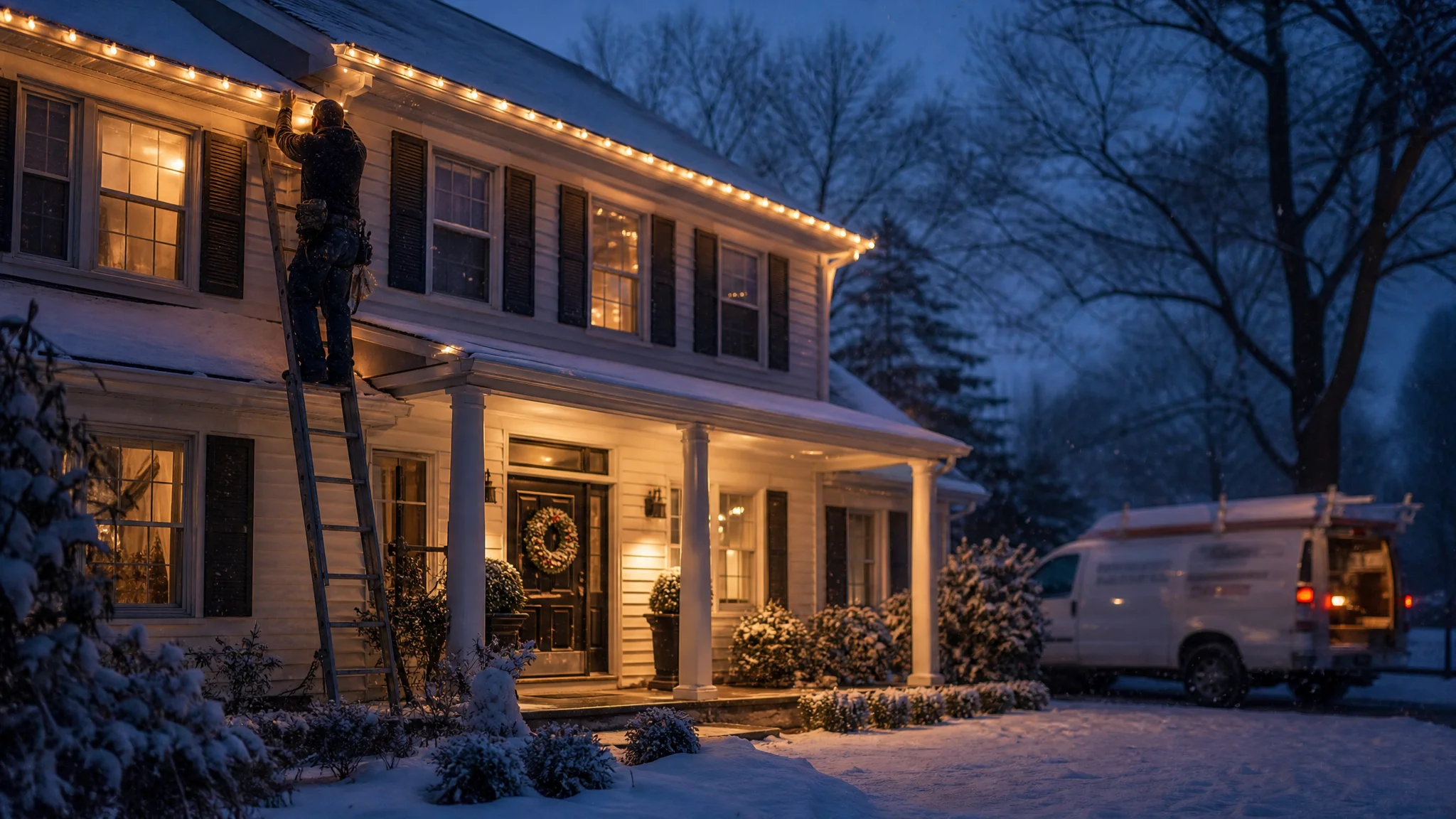
The Indiana install window is narrower than most homeowners expect. Here is how the calendar actually works, and why the higher western counties need to book earlier than the Ohio River corridor.
Most Indiana homeowners start thinking about holiday lighting sometime in November. By then the good dates are gone.
The working install window in Indiana runs from early October through roughly the first week of December. That is not a marketing deadline, it is a physical one. Once the ground freezes hard and sustained ice moves through, safe roof access disappears and adhesive and clip performance drops. Crews cannot responsibly do quality attachment work on an iced roofline.
That window is also not uniform across our territory. The higher ground in the West territory, through Monroe, Brown and Lawrence counties, tends to see cold settle in earlier than the Ohio River corridor does. If your property is in the western end of the territory, treat early October as your target rather than your early option.
The Ohio River end of the East territory has a bit more room. The pattern there is cold air and ice events with modest snow totals, and the practical cutoff is usually the first week of December in a normal year.
Southern Indiana and the Ohio River communities run mildest, and in some years installs remain workable into mid-December. That is not something to plan around, though. A single early cold snap removes the margin entirely.
Here is how to think about booking. Reserving by Labor Day gives you genuine choice of dates, including the pre-Thanksgiving weekends that most families actually want. Reserving by mid-October still lands you a comfortable slot in most years. After late October, availability tightens quickly, because commercial contracts and returning residential clients occupy the calendar first and new residential work fills in around them.
Commercial properties operate on a different clock again. Multi-tenant plazas, office parks, and hospitality properties often need staged or overnight installs so that tenant and customer access is never interrupted, and that scheduling has to be coordinated weeks ahead. If you manage commercial property in Indiana, the practical planning conversation should happen in late summer.
One more piece people forget: takedown. Removal in Indiana begins in early January and generally wraps by February, once roofs are walkable again. A good install plan accounts for takedown and storage from the start, not as an afterthought in January.
If you want to be lit before Thanksgiving, the decision point is earlier than it feels. Reach out and we will tell you honestly what is still open for your part of the state.